If you've been sticking to a single metal out of habit rather than preference, this guide is for you.
Why Mixed Metals Work
Gold and silver sit on opposite ends of the colour temperature scale — warm and cool respectively. That contrast is precisely what makes them interesting together. The same principle applies in interior design, in clothing, in art: opposing tones create visual tension, and visual tension, handled well, is what makes a look feel intentional rather than accidental.
The shift toward mixed metals has also been practical. As gold prices have risen steadily, designers and wearers alike have found that blending metals isn't a compromise — it's often a more interesting result than matching everything in one tone.
Understanding Your Metals
Gold Plated Jewellery
Warm undertones
Adds visual warmth and richness
Flatters warm skin tones naturally
Grounds cooler outfit palettes
Silver Jewellery
Cool undertones
Crisp, modern, and versatile
Enhances cool skin tones
Balances warm-toned clothing
When you combine them thoughtfully, the two metals balance each other. The eye moves between warm and cool in a way that feels dynamic rather than discordant — provided there's some logic to how you've arranged them.
Three Approaches That Actually Work
The Bridge Piece
The easiest way to start mixing metals is to let a single piece do the work. Two-tone jewellery — a watch, a ring, a chain with mixed hardware — naturally connects the two metals in your look because both tones already coexist in one object. It removes the guesswork entirely.
Two-Tone Watches
Act as an automatic anchor for mixed metal looks without any additional effort.
Mixed-Metal Rings
Gold and silver bands in a single piece provide instant visual coordination across a stack.
Layered Necklaces
Designs that combine warm and cool tones in one layered piece make a strong starting point.
Statement Earrings
Earrings with contrasting metal accents introduce mixing at a scale that's easy to control.
The 70-30 Proportion Rule
When you're building a mixed metal look from separate pieces, proportion matters. A rough split where one metal dominates — around 70% — and the other plays a supporting role tends to read as deliberate. Equal splits can work, but they require more confidence and more careful selection.
Gold Dominant
Gold necklace and rings with a single silver bracelet as the accent.
Silver Dominant
Silver earrings and watch with one gold pendant as the contrast.
Equal Split
Works best as a deliberate statement, typically with bolder, simpler pieces.
Working With Your Skin Tone
Mixed metals give you more flexibility than a single-metal approach, but your natural undertones still shape which combinations look most cohesive on you.
Skin Tone Guidelines
- Warm undertones (golden, peachy, olive): Lead with gold and accent with silver. Rose gold bridges the two particularly well.
- Cool undertones (pink, red, or blue-toned): Use silver as your primary metal and bring in gold as an accent. White gold tends to integrate more smoothly than yellow gold.
- Neutral undertones (a mix of warm and cool): You have the most freedom here — bold contrasts work as well as subtle ones.
Applying the Rules by Jewellery Type
Layered Necklaces
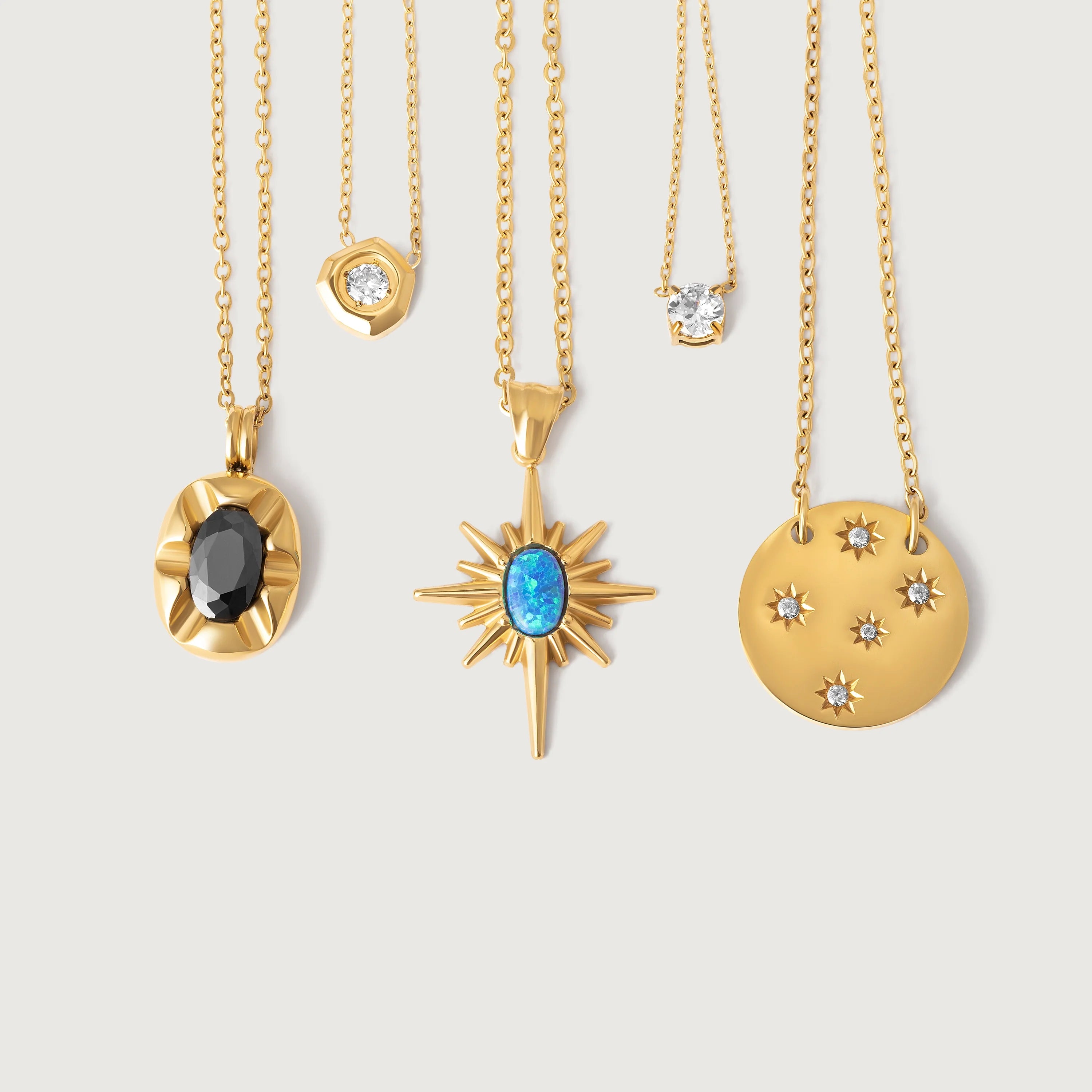
Necklace layering is one of the clearest opportunities for mixed metals because the lengths create natural separation between pieces. A fine gold chain at one length and a silver pendant at another read as a considered combination rather than a clash. Texture variation — matte against polished, or a delicate chain against a chunkier one — adds another layer of interest beyond colour alone.
Exploring contemporary necklace collections can give you a clearer sense of which lengths and weights layer well together.
Stacked Rings
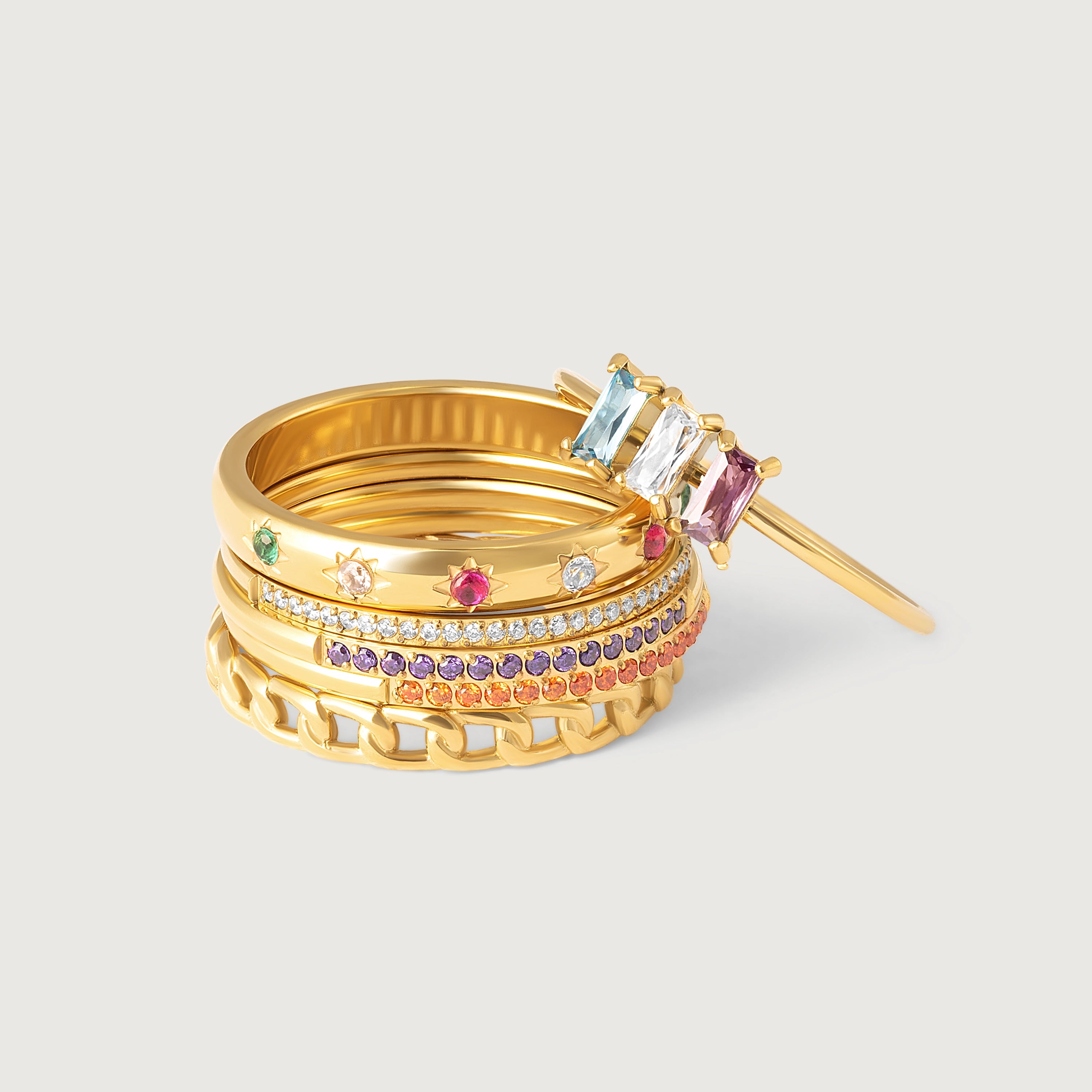
Rings offer the most room to experiment because the scale is small and adjustments are easy. Whether you're starting with versatile ring designs or building on what you already own, there are a few reliable approaches.
The Alternating Method
Gold, silver, gold across multiple fingers. Creates a clear rhythm that looks considered.
The Clustered Approach
Mix metals on specific fingers while keeping others clean. Concentrated contrast rather than spread-out variety.
The Accent Strategy
Primarily one metal with a single contrasting band. Works especially well alongside a wedding or engagement ring in a different metal.
Bracelets and Watches
Your watch, if you wear one, often sets the tone for your wrist stack. A two-tone watch handles the mixing for you and makes almost any additional bracelet — gold or silver — feel cohesive. If your watch is a single metal, use it as your dominant tone and treat the contrasting metal as an accent.


Common Mistakes Worth Avoiding
Working Against Your Skin Tone
The problem: Leading with a metal that clashes with your undertones makes the whole look feel off, regardless of how well the pieces work together.
The fix: Start with the metal that flatters you most as your dominant tone, then bring in the contrasting metal as an accent.
Too Many Metals at Equal Weight
The problem: When gold and silver appear in equal, unstructured amounts across a look, neither dominates and the result reads as undecided rather than eclectic.
The fix: Establish a clear primary metal. The contrast piece should feel like a choice, not a leftover.
Mismatched Quality
The problem: A quality piece paired with something visibly cheap draws attention to the difference rather than the combination.
The fix: Build gradually with a few well-made basics in each metal before expanding. Fewer, better pieces always outperform a large mixed collection.
Building a Mixed Metal Collection
Where to Start
A Quality Two-Tone Watch
The single piece that makes everything else easier to coordinate.
A Delicate Gold Chain
Layers with almost anything and serves as a foundation for more complex looks.
Classic Silver Hoops
Timeless, versatile, and easy to combine with warm-toned pieces at the neck or wrist.
A Mixed-Metal Ring
A single piece that handles the coordination for you and works as a stepping stone to more confident mixing.
When you're ready to expand, look at modern ring designs that already incorporate multiple metals, or explore necklace styles built for layering.
A practical note on budget: Test combinations with more affordable pieces before committing to investment buys. The logic of what works — proportion, tone, texture — is the same at every price point.
A Note on Sustainability
One underappreciated benefit of mixed metals: you get more looks from fewer pieces. Building a small, well-chosen collection across both gold and silver — rather than a large single-tone wardrobe — is a more considered and sustainable approach to jewellery.
The Only Rule That Matters
There are no combinations that are categorically wrong. The guidelines in this piece exist to help you find what feels right faster — they're not constraints. Some of the best mixed metal looks come from instinct and repetition rather than rules. Wear what appeals to you, observe what works, and adjust from there.
Whether you prefer a single accent piece in a contrasting metal or a fully stacked, layered look with both tones in play, mixed metals give you more to work with than a strictly matched approach ever could. Start with one piece that feels like a stretch, and go from there.
Ready to Start Your Mixed Metal Look?
Explore our collections — designed to layer, stack, and mix. From delicate chains to statement rings, find the pieces that suit how you actually wear jewellery.